A special from the Heróis da Bíblia portal

Persia & Israel

From Prophecy to Conflict

2,600 years of history between two peoples who shaped the world

Chapter 1

The Unlikely Alliance

605–400 BC

Exile, liberation and alliance

The Jewish people were taken into exile in Babylon by Nebuchadnezzar II in 605 BC. Decades later, the Persian king Cyrus II conquered Babylon and did something unprecedented in antiquity: he decreed the freedom of all captive peoples and allowed them to return to their lands. For the Jews, he was more than a king — he was an anointed one of God.

605 BC

First deportation of Jews to Babylon (Daniel among the captives)

597 BC

Second deportation; Ezekiel taken into exile

586 BC

Destruction of the First Temple by Nebuchadnezzar

539 BC

Cyrus II conquers Babylon without battle

538 BC

Edict of Cyrus: Jews authorized to return to Canaan

537 BC

First group of returnees led by Zerubbabel

516 BC

Reconstruction of the Second Temple completed

479 BC

Esther and Mordecai save the Jews in Persia

458 BC

Ezra leads second group of returnees

445 BC

Nehemiah rebuilds the walls of Jerusalem

Key Biblical Passages

Isaiah 44:28 and 45:1

Cyrus called "anointed" (mashiach) 150 years before his birth

Daniel 6

Daniel in the lions' den, under Persian rule

Ezra 1:1-4

The Edict of Cyrus

Esther 3–9

Haman's threat and the salvation of the Jewish people

Archaeological Relevance

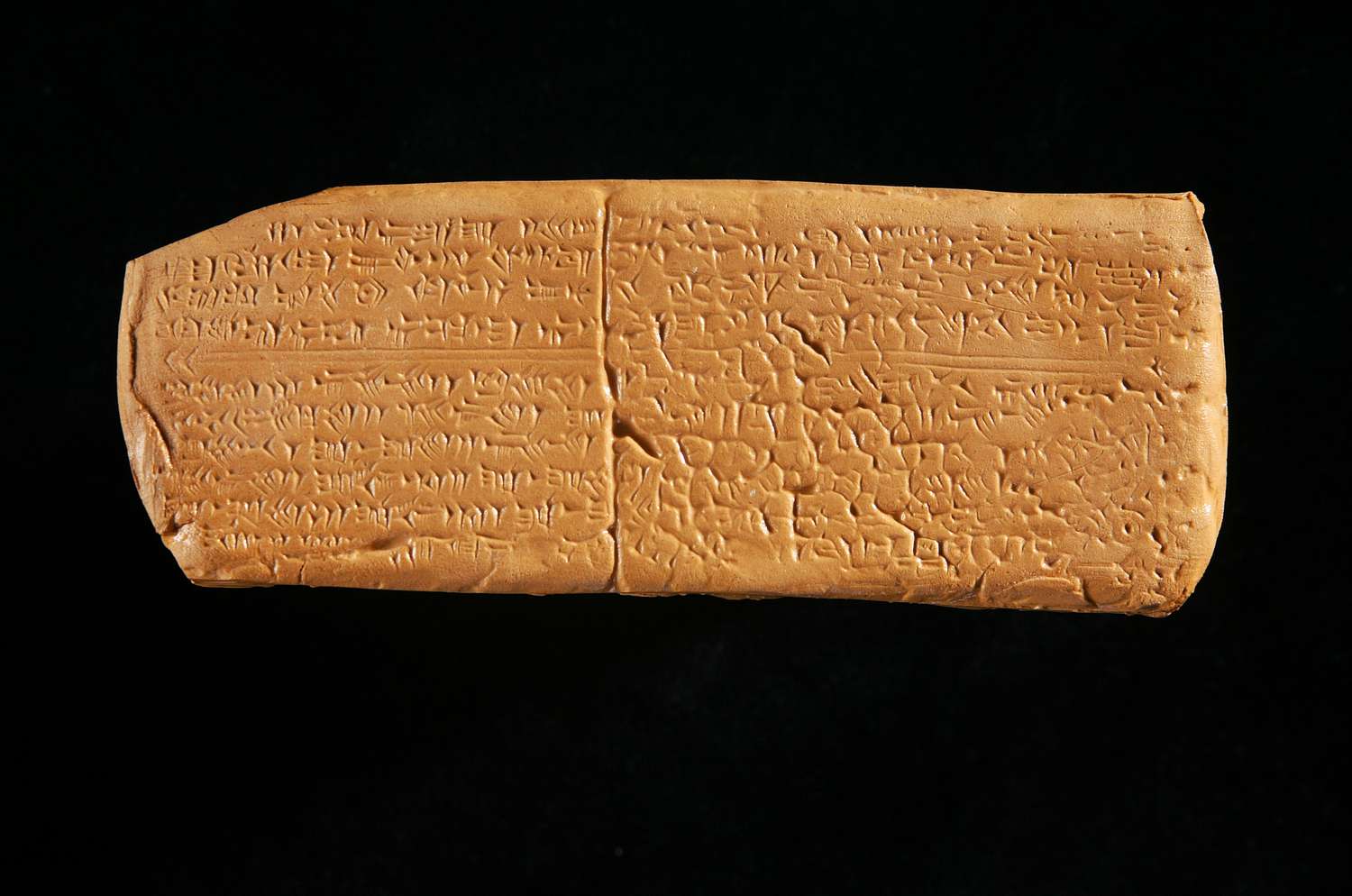
Cyrus Cylinder (British Museum) — confirms the policy of liberating peoples. Murashu Tablets (Nippur) — document a thriving Jewish community in Persia.


Chapter 2

Under Greek Rule and the Revolt

332–63 BC

Hellenization, resistance and identity

Alexander the Great conquered Persia and Israel entered the Hellenistic sphere. Under the Seleucids, a systematic persecution of the Jewish faith began. Antiochus IV Epiphanes desecrated the Temple — and the Maccabees responded with one of the most remarkable revolts in ancient history.

332 BC

Alexander the Great conquers Judea (without resistance)

323 BC

Death of Alexander; division of the empire

198 BC

Seleucids (Syrians, heirs of Persia) take control of Judea

175 BC

Antiochus IV Epiphanes rises to power

168 BC

Desecration of the Temple: pig sacrificed on the altar, Torah scroll burned

167 BC

Beginning of the Maccabean revolt (Judas Maccabeus)

164 BC

Reconquest of the Temple; origin of Hanukkah

142 BC

Jewish independence: Hasmonean dynasty

Connection with Daniel

Daniel 7-8

The prophecy of the "four beasts" and the "little horn" is interpreted by many theologians as a direct reference to Antiochus IV — fulfilled in disconcerting detail.

Chapter 3

Between Rome and Parthia

63 BC – 637 AD

Destruction, diaspora and resistance

Rome dominated Israel. Persia resurged as the Parthian and later Sassanid Empire — a rival power to Rome that sometimes threatened, sometimes protected the Jews. Meanwhile, the Second Temple was destroyed (70 AD) and the Jewish people scattered across the world.

63 BC

Pompey conquers Jerusalem for Rome

37 BC

Herod the Great ascends to the throne of Judea

~4 BC

Birth of Jesus of Nazareth

70 AD

Titus destroys Jerusalem and the Second Temple

132-135

Bar Kokhba revolt; Jews expelled from Judea (renamed "Syria Palaestina")

226 AD

Sassanid Empire replaces the Parthians; Jewish community in Persia thrives

614 AD

Sassanid Persians conquer Jerusalem with support from local Jews

628 AD

Byzantium retakes Jerusalem; persecution of Jews

637 AD

Arab-Islamic conquest of Persia; end of the Sassanid Empire

Historical Note

During the Sassanid period, Babylon (present-day Iraq/Iran) housed the largest and most influential Jewish community in the world. The Babylonian Talmud was compiled there.

Chapter 4

Centuries of Silence and Coexistence

637–1900 AD

Islam, dhimmi and Persian communities

With the Islamic conquest, Jews in Persia (present-day Iran) lived as dhimmis — protected, but with limited rights. Over the centuries, there were periods of tolerance and persecution. The Persian Jewish community survived intact for over a thousand years.

7th–9th c.

Jews under Islamic caliphates: special taxation (jizya), social restrictions

10th–11th c.

Persian Jewish community produces important poets and philosophers

1502

Safavids make Shia Islam the official religion of Iran; situation of Jews worsens

18th–19th c.

Occasional persecutions and forced conversions

1844

Emergence of the Baha'i movement in Iran (persecuted as much as Jews)

1890

Approximately 35,000 Jews live in Iran

Biblical Era
400 BC 1897 AD
Modern Era

1,500 years of silence separate the ancient world from the rebirth of a nation

Chapter 5

The Birth of Zionism

1897–1947

Dream, migration and emerging conflict

European antisemitism gave rise to the Zionist movement. Theodor Herzl proposed a Jewish state. The Balfour Declaration (1917) promised British support. The Holocaust made the urgency irrefutable. Iran, during this period, was relatively neutral — and even had sympathetic relations with Zionism.

1897

First Zionist Congress (Basel, Herzl)

1917

Balfour Declaration: United Kingdom supports Jewish national home in Palestine

1920-1947

British Mandate of Palestine; waves of Jewish immigration

1933-1945

Holocaust: 6 million Jews murdered

1941

Reza Shah of Iran deposed by the Allies for Axis sympathies

1947

UN approves partition of Palestine (Plan 181)

Historical Curiosity

During the Holocaust, the Iranian ambassador in Paris, Abdol Hossein Sardari, saved hundreds of Iranian Jews by providing false documents — often called the "Iranian Schindler."

Chapter 6

Israel Is Born; Iran Was an Ally

1948–1978

Independence and unexpected alliance

The State of Israel was proclaimed on May 14, 1948. The Shah's Iran became a strategic ally of Israel — but the backstory is dark. In 1953, the CIA and MI6 overthrew democratically elected Prime Minister Mossadegh to protect Western oil interests, restoring the Shah as absolute ruler. Iranian oil fueled Israel and the West; Israeli intelligence trained SAVAK, the regime's brutal secret police. The alliance was real — but built on the resentment of a people whose democratic government had been destroyed by foreign powers.

May 14, 1948

Proclamation of the State of Israel

1948

War of Independence; Arab countries invade Israel

1950

Iran recognizes Israel de facto (second Muslim-majority country after Turkey)

1951

PM Mohammad Mossadegh nationalizes Iranian oil, defying the British Anglo-Iranian Oil Company (future BP)

1953

Coup d'état: CIA (Operation Ajax) and MI6 (Operation Boot) overthrow Mossadegh and restore the Shah as absolute ruler — to secure Western access to Iranian oil

1954

International oil consortium takes 40% of Iranian oil: US, UK, France and the Netherlands divide Iran's wealth

1957

Shah creates SAVAK (secret police) with help from the CIA and Mossad — an instrument of brutal repression against dissidents

1950s-60s

Iran-Israel strategic cooperation: oil, agriculture, intelligence — while the Iranian people live under a Western-backed dictatorship

1963

Shah's "White Revolution": top-down modernization backed by the US — Shia clerics led by Khomeini oppose it and are exiled

1967

Six-Day War: Israel conquers West Bank, Gaza, Sinai, Golan

1973

Yom Kippur War; Iran supplies oil to Israel during Arab embargo

1975

"Periphery Doctrine": Iran, Israel and Turkey as anti-Arab regional alliance

The Weight of History

The 1953 coup is considered the West's "original sin" in Iran. The CIA only officially acknowledged its role in 2013. For many Iranians, the Shah's dictatorship, SAVAK's repression, and oil exploitation were direct fruits of American and British interference — a resentment that directly fueled the 1979 Revolution.

Alliance
1978 | 1979
Rupture

In days, decades of alliance are destroyed. Iran becomes a declared enemy of Israel.

Chapter 7

The Revolution That Changed Everything

1979

The turning point

The 1979 Islamic Revolution didn't come out of nowhere — it was the result of 26 years of accumulated resentment since the 1953 coup. The Iranian people saw their democracy destroyed by foreign powers, endured decades of Western-backed dictatorship and SAVAK repression. Ayatollah Khomeini channeled that fury: he seized power and declared Israel the "Little Satan" and the US the "Great Satan." In days, decades of alliance were destroyed.

Jan 1979

Shah Mohammad Reza Pahlavi flees Iran

Feb 1, 1979

Khomeini returns from exile in France

Feb 11, 1979

Proclamation of the Islamic Republic of Iran

Mar 1979

Israeli embassy in Tehran is handed over to the PLO of Yasser Arafat

1979

Iranian Jews begin mass exodus (80,000+ emigrate to Israel and the US)

Khomeini on Israel

He declared that "Israel must be wiped off the map" and instituted Quds Day (last Friday of Ramadan) as an annual day of protest against Israel.

Jews Who Stayed

Despite the revolution, approximately 25,000 Jews remain in Iran today — the largest Jewish community in the Middle East outside of Israel. They live under restrictions but with some official protection.

Chapter 8

War, Proxy and the Bomb

1980–2010

Proxy war and nuclear program

Iran began financing, arming and training groups that attacked Israel indirectly — Hezbollah (Lebanon) and Hamas (Gaza). Simultaneously, it developed a nuclear program that Israel considered an existential threat.

1980-1988

Iran-Iraq War (Saddam Hussein invades Iran; US and Israel supplied weapons to both sides)

1982

Israel invades Lebanon; Iran founds Hezbollah

1992

Attack on Israeli embassy in Buenos Aires (attributed to Hezbollah/Iran): 29 dead

1994

Attack on AMIA (Jewish center in Buenos Aires): 85 dead

2000

Israel withdraws from southern Lebanon

2002

Iranian nuclear program revealed (centrifuges at Natanz)

2006

Israel-Hezbollah War (34 days); 1,200 Lebanese dead, 165 Israelis

2007

Israel destroys Syrian nuclear reactor (suspected of having Iranian support)

2010

Stuxnet virus (created by Israel and US) sabotages Iranian nuclear centrifuges

Chapter 9

Direct Escalation

2010–2023

Assassinations, sanctions and nuclear proximity

Israel intensified covert operations against the Iranian nuclear program. Scientists were assassinated. Facilities suffered mysterious sabotage. Iran drew ever closer to having nuclear capability.

2010-2012

Series of assassinations of Iranian nuclear scientists (attributed to Mossad)

2015

Nuclear Deal (JCPOA): Iran limits enriched uranium in exchange for sanctions relief

2018

Trump withdraws US from nuclear deal; reimposition of maximum sanctions

2019-2023

Iran resumes enriching uranium above limits (reaches 84% — bomb threshold is 90%)

Jan 2020

Assassination of Qasem Soleimani (IRGC) by American drone in Iraq

Nov 2020

Assassination of Mohsen Fakhrizadeh, "father of the Iranian bomb" (attributed to Mossad)

2023

Iran and Saudi Arabia resume diplomatic relations (Chinese mediation)

Chapter 10

The Day That Changed the Middle East

Oct 7, 2023 – present

Open war and unprecedented escalation

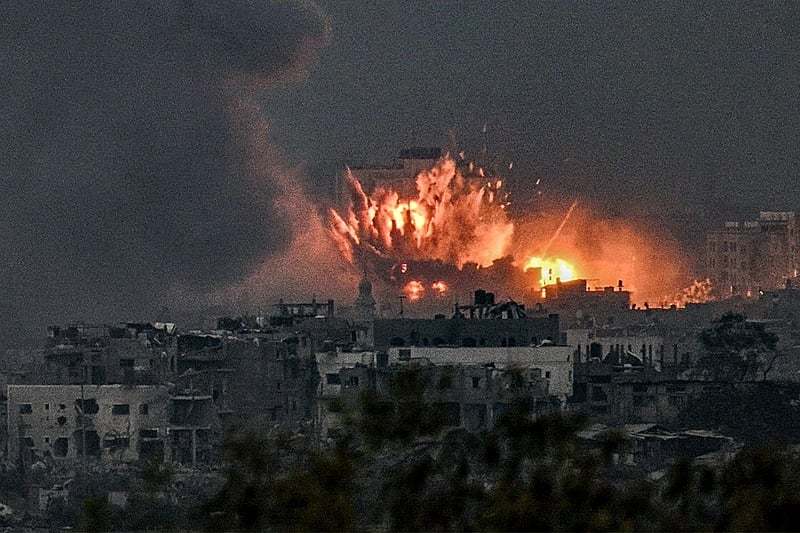
On October 7, 2023, Hamas — funded and trained by Iran — launched the largest attack against Jews since the Holocaust. 1,200 Israelis were murdered; 251 were taken hostage. Israel declared war and launched an offensive in Gaza. In April 2024, for the first time in history, Iran attacked Israel directly with missiles and drones.

Oct 7, 2023

Hamas attack: 1,200 dead, 251 hostages, entire kibbutzim massacred

Oct 7, 2023

Israel declares state of war; beginning of Gaza operation

Jan 2024

Houthis of Yemen (backed by Iran) attack ships in the Red Sea

Apr 1, 2024

Israel strikes Iranian consulate in Damascus; kills IRGC general

Apr 13-14, 2024

FIRST TIME IN HISTORY: Iran attacks Israel directly with 300+ drones and ballistic missiles (99% intercepted)

Apr 19, 2024

Israel carries out limited strike against facility in Iran (Isfahan)

Jul 2024

Assassination of Ismail Haniyeh (Hamas political leader) in Tehran — attributed to Mossad

Aug-Sep 2024

Israel deals devastating blows to Hezbollah: elimination of Hassan Nasrallah

Oct 2024

Iran launches second direct attack with ballistic missiles against Israel

Nov-Jan 2025

Collapse of Assad in Syria; fall of the "axis of resistance"

Jan 2025

Ceasefire agreement in Gaza (Phase 1); release of hostages

2025

Iran at a moment of fragility: Hezbollah weakened, Hamas dismantled, Assad fallen

Geography of the Conflict

From Persepolis to Gaza — the places that shaped 2,600 years of history

Biblical Era
Islam and Silence
Modern Era
Current Conflict

Characters

50 figures who shaped 2,600 years of history

Prophetic Connections

When prophecy meets history — texts written centuries before the events they describe

Isaiah 44:28 – 45:1

Written ~700 BC — Cyrus born ~100 years later

"I say of Cyrus: He is my shepherd and will accomplish all that I please... This is what the Lord says to Cyrus, his anointed, whose right hand I have grasped to subdue nations before him."

Historical Fulfillment

Cyrus is the only non-Jewish leader in the Bible called "mashiach" (anointed/messiah). The precision of the prophecy — name included — is one of the most remarkable prophetic texts in Scripture. Fulfilled in 538 BC with the Edict of Cyrus, confirmed by the Cyrus Cylinder in the British Museum.

Daniel 8 — The ram and the goat

Written 6th c. BC

The two-horned ram = Media and Persia. The swift goat = Greece (Alexander). The great horn broken = death of Alexander. The four horns = division of the empire. The "little horn" = Antiochus IV Epiphanes.

Historical Fulfillment

Fulfilled with historical precision around ~165 BC. Antiochus desecrated the Temple exactly as described. The Maccabean revolt and the restoration of the Temple gave rise to Hanukkah.

Ezekiel 38 — The war of Gog and Magog

Written 6th c. BC

A coalition led by "Gog, of the land of Magog" will attack Israel "in the latter days." The text mentions "Persia" (Iran), "Cush" (Ethiopia/Sudan), "Put" (Libya), Gomer (Turkey?) as allies of the attacker.

Contemporary Context

This prophecy is frequently cited in the context of the current Iran-Israel conflict. Many modern theologians explicitly identify Persia (Iran) in the text (Ezek 38:5). The described coalition mirrors contemporary geopolitical alliances.

Esther — The Pattern That Repeats

5th c. BC

The pattern of the book of Esther: dominant power, hostile leader planning extermination of the Jews, Jewish community in existential danger, providential reversal.

Historical Parallels

Many rabbis and Christian theologians identify direct parallels with the 20th century (Holocaust) and with the contemporary Iranian nuclear threat. The pattern of existential threat followed by unexpected reversal echoes throughout all of Jewish history.

Documentaries

Dive deeper into the history with selected documentaries

BBC News Brasil

US and Iran: how the two countries went from allies to enemies

The history of the relationship between the United States and Iran — from strategic alliance to direct confrontation.

BBC News Brasil

The maps that explain how the conflict spread

How the conflict between the US, Israel and Iran expanded across the Middle East — explained through maps.

BBC News Brasil

What is behind the US and Israel attack on Iran

BBC analysis of the behind-the-scenes and motivations behind the attacks on Iran.

Gallery

Today

The conflict that began on scrolls echoes in the news

October 7, 2023

Hamas — funded and trained by Iran — launches the largest attack against Jews since the Holocaust. 1,200 Israelis are murdered; 251 taken hostage. Entire kibbutzim are massacred.

October 7, 2023

Israel declares a state of war and launches a ground and air operation in Gaza.

December 2023

Israel eliminates Hamas military leaders. The offensive intensifies across the entire Gaza Strip.

January 2024

Houthis of Yemen (backed by Iran) attack commercial ships in the Red Sea, expanding the conflict to the maritime theater.

April 1, 2024

Israel strikes the Iranian consulate in Damascus, killing an IRGC general. Direct escalation between Iran and Israel becomes inevitable.

April 13-14, 2024

FIRST TIME IN HISTORY: Iran attacks Israel directly with over 300 drones and ballistic missiles. 99% are intercepted by the Israeli defense system with support from the US, UK and Jordan.

April 19, 2024

Israel carries out a limited retaliatory strike against a military installation in Iran (Isfahan).

May-June 2024

Ceasefire negotiations advance and retreat. Hostages die in captivity. International pressure on Israel increases.

July 2024

Assassination of Ismail Haniyeh, Hamas political leader, in Tehran — attributed to Mossad. In the same month, Fuad Shukr, Hezbollah commander, is eliminated in Beirut.

August-September 2024

Israel deals devastating blows to Hezbollah in Lebanon. Hassan Nasrallah, leader of Hezbollah since 1992 and Iran's most powerful proxy, is assassinated in Beirut.

October 2024

Iran launches a second direct attack with ballistic missiles against Israel. Israel retaliates by striking Iranian air defense systems. Yahya Sinwar, architect of October 7, is eliminated in Gaza.

November 2024 – January 2025

Collapse of the Assad regime in Syria. Iran's "axis of resistance" crumbles: Hezbollah weakened, Hamas dismantled, Assad fallen.

January 2025

Ceasefire agreement in Gaza (Phase 1). Beginning of hostage release. Iran finds itself at its most fragile moment in decades.

The human cost

Deaths in the Iran vs. Israel conflict — civilians vs. military

Israel · Iran · Hezbollah (Iranian proxy) · 1982–2026

Civilians Military / combatants
Israel
0 Israelis killed — direct conflict with Iran and its proxies
Civilians 0 ~55% of total
~200 Hezbollah rockets on northern Israel (cumulative)
0 Buenos Aires 1992/94 (Hezbollah/Iran)
0 Lebanon War 2006 (Israeli civilians)
0 Twelve-Day War 2025 (direct Iranian attack)
~15 Iran War 2026 (partial)
Military (IDF) 0 ~45% of total
0 Lebanon War 2006 (vs Hezbollah)
~70 Operations vs Hezbollah 2024
~85 Direct confrontations with Iran 2025–26
Iran & Hezbollah
0 + killed — direct conflict with Israel
Iranian civilians 0+ ~36% of total
0 Iran — Twelve-Day War 2025
~800+ Iran — War 2026 (partial)
Military & combatants 0+ ~64% of total
0 IRGC — Twelve-Day War 2025
~600+ IRGC — War 2026
~1,000+ Hezbollah — combatants eliminated by Israel (2006–2024)
~200+ Leaders eliminated (Soleimani, Nasrallah, Fakhrizadeh, Haniyeh, nuclear scientists)
Total death proportion — Israel vs. Iran & proxies
17%
83%
Israel ~715 Iran & Hezbollah ~3,500+
Estimated total — Iran vs. Israel conflict 0 +

Every number is a life. Every life, a story that will not be told.

This survey covers only the direct conflict between Iran and Israel, including Hezbollah as Iran's military arm. It does not include the Israel-Palestine conflict (Gaza) or civilians from neighboring countries — although Iran finances groups such as Hamas and Islamic Jihad that operate in those regions.

Methodological transparency: data limited to the direct Iran-Israel confrontation and Hezbollah operations (Iran's main proxy) against Israel. Iranian numbers from 2025–26 may be underreported by the government. Eliminated leaders include assassinations attributed to Israel (Mossad/IDF). Sources: HRANA, Times of Israel, Wikipedia (Twelve-Day War), IISS, UN reports.

What does the Bible say about what comes next?

The history between Persia and Israel is not over. From Cyrus to Khamenei, from Daniel to Netanyahu, the 2,600-year narrative thread continues to be woven. The prophecies of Ezekiel 38 remain on the horizon. The pattern of Esther repeats. And the biblical promise that Israel's destiny is in the hands of God echoes with ever greater force.

Go Deeper

Articles from the Heróis da Bíblia portal on this topic