



A boat-shaped rock formation, radar scans revealing underground corridors, soil with organic matter three times higher than surrounding areas, and ceramic fragments dating to 5,500 years ago. What is buried in the mountains of eastern Turkey may be the greatest biblical discovery in history, or the greatest archaeological mistake of the century. The controversy continues.
In eastern Turkey, 29 kilometers from Mount Ararat and at 2,000 meters altitude, there exists a geological formation that should not be there. It measures exactly 157 meters in length, has the unmistakable shape of a ship's hull, and its dimensions match almost perfectly with the biblical measurement of Noah's Ark, described in Genesis 6:15 as 300 cubits in length, approximately 137 to 157 meters depending on the cubit used.
Since 2019, an American team led by independent researcher Andrew Jones has applied cutting-edge technologies to the site, and the results have fueled one of the most heated debates in contemporary biblical archaeology. In April 2026, the most recent soil analysis data showed significant chemical differences between the interior and exterior of the formation, consistent with long-term decomposition of a large organic structure.
But before examining the current evidence, it is necessary to understand why the search for Noah's Ark has lasted more than 150 years, who were the explorers who dedicated their lives to it, and what the scientific community really thinks about the matter.
What the Bible Says About the Ark
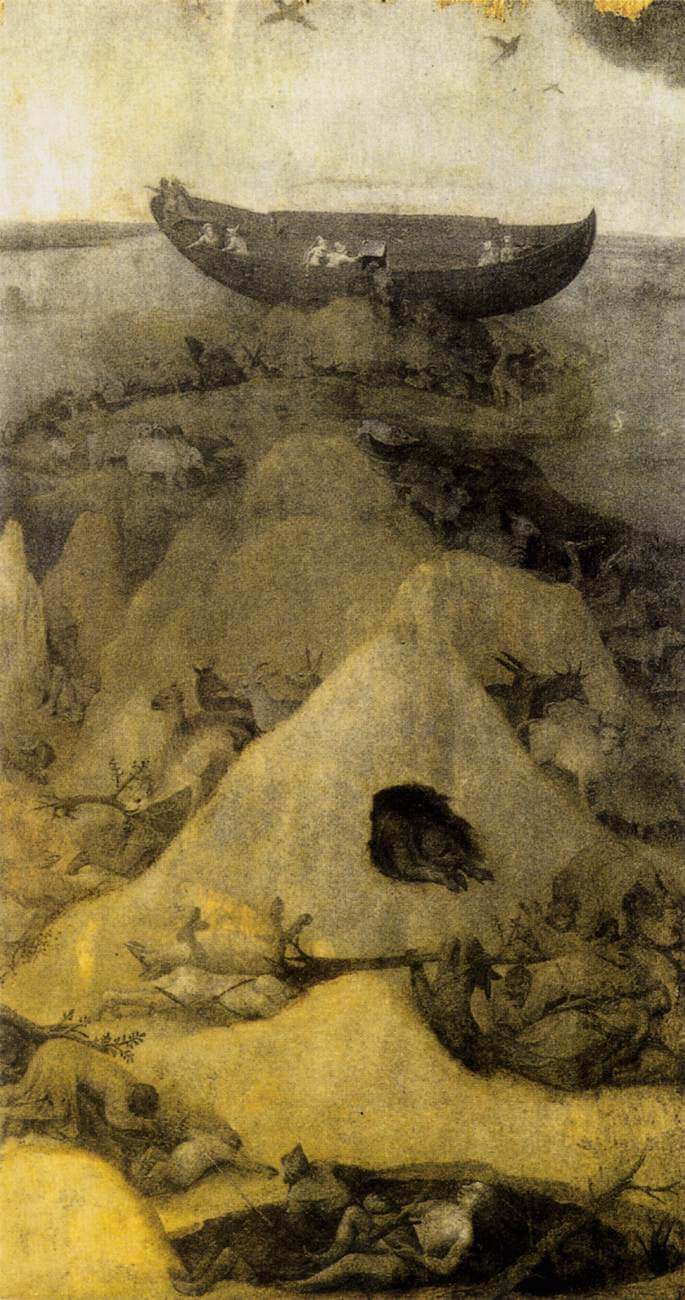
The biblical account of Noah's Ark occupies six chapters of the book of Genesis (chapters 6 to 9) and is one of the most well-known texts of all Scripture. God instructs Noah to build a monumental wooden vessel of gopher wood, with precise dimensions: 300 cubits in length, 50 in width, and 30 in height. With three internal decks, windows, a side door, and the capacity to preserve specimens of all terrestrial fauna, the Ark was to withstand the global Flood sent to purify the corrupted earth.
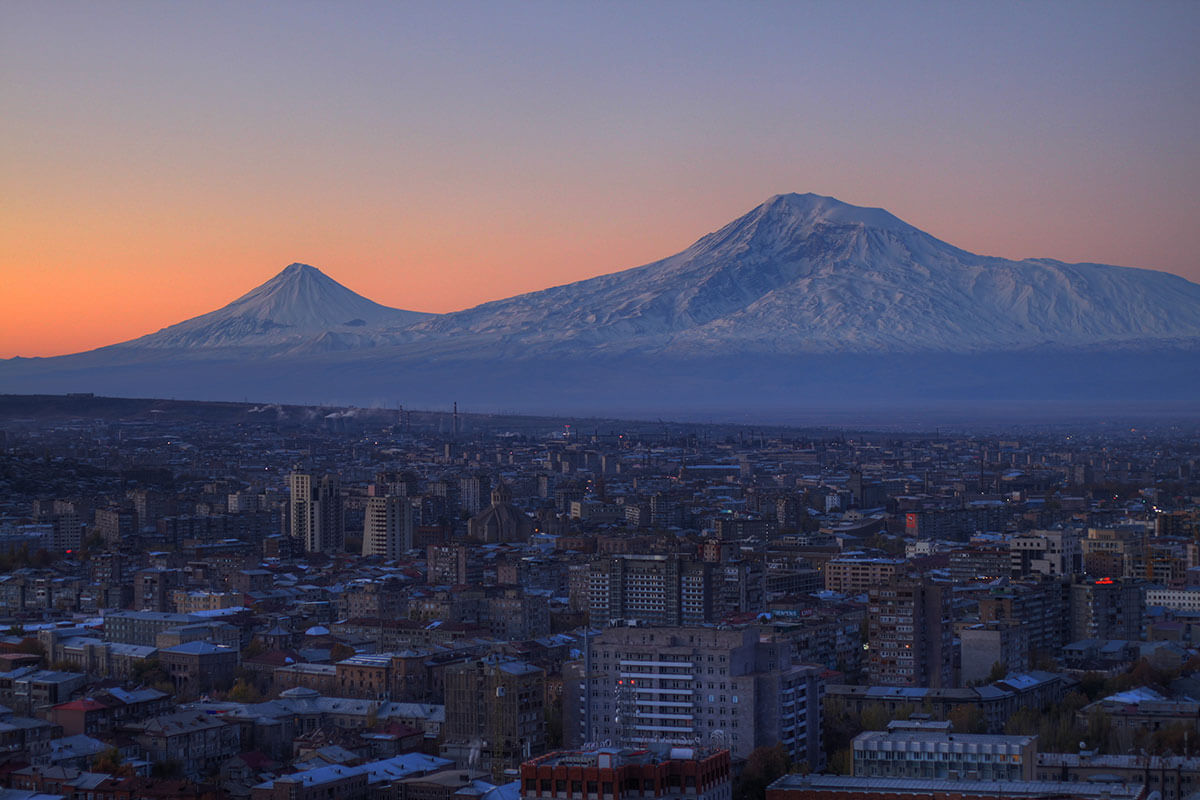
After the waters receded, Genesis 8:4 records that "the ark came to rest on the mountains of Ararat," in the seventh month, on the seventeenth day. The Hebrew term used in the original, Ararat, corresponds to the ancient kingdom of Urartu, which encompassed parts of present-day eastern Turkey, Armenia, and Iran. The geographical imprecision is intentional: the text speaks of "mountains" in the plural, not a specific peak.
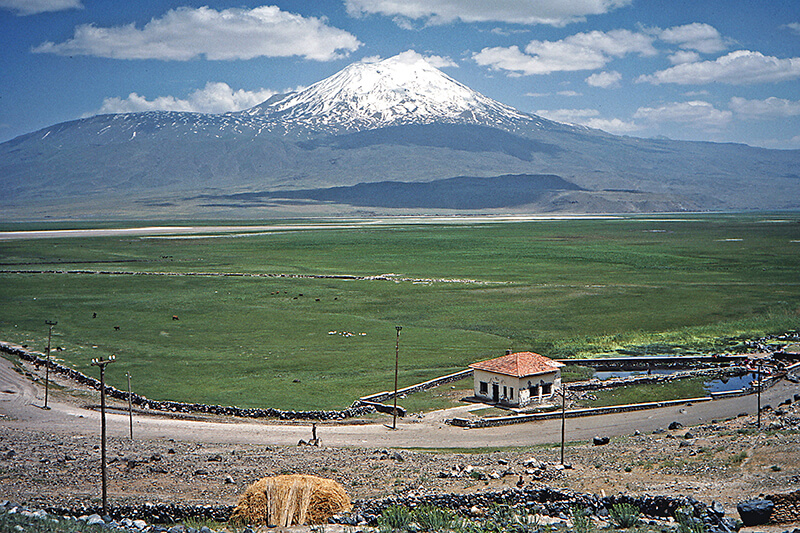
This detail is crucial to understanding the modern controversy. Mount Ararat itself, Turkey's highest peak at 5,137 meters, is not the only possible candidate. Several ancient traditions, including the Islamic one, pointed to Mount Judi (Al-Cudi), a different mountain range mentioned in the Quran as the resting place of Noah's vessel.
150 Years of Expeditions: From Heroic Faith to Outright Fraud
The organized search for Noah's Ark on Mount Ararat officially began in 1829, when German naturalist Friedrich Parrot led the first modern ascent of the peak, documenting that the Armenians of the region were absolutely certain that the Ark remained at the summit, protected by angels who prevented any approach. Parrot climbed, recorded the geology, and found nothing but ice and rock.
James Bryce and the Piece of Wood (1876)
The most celebrated account of the nineteenth century belongs to British diplomat and politician James Bryce, who scaled Ararat in 1876. At 4,000 meters altitude, he found a piece of wood that he described as "approximately 1.2 meters in length and five centimeters in thickness, evidently cut by some tool, and so above the tree line that it could in no way be a natural fragment." Bryce brought a piece back with him and speculated that it could be from the Ark. Later, however, he considered the interpretation unlikely, acknowledging that volcanic erosion and millennia made preservation practically impossible.
Bryce's story opened a pattern that would repeat for decades: explorer climbs Ararat, finds something ambiguous, the media celebrates the discovery, and science cools the enthusiasm. Between 1856 and 1974, it is estimated that more than 200 people from 23 countries claimed to have sighted the Ark on Mount Ararat. From 1961 to 1976, at least 37 separate expeditions climbed the mountain.
The Astronaut Who Found Nothing
One of the most memorable expeditions was led by former NASA astronaut James Irwin, who walked on the Moon during the Apollo 15 mission and believed that finding the Ark would be equally possible with sufficient faith. Between 1982 and 1988, Irwin climbed Ararat seven times, suffering fractures and serious injuries along the way. In the end, his conclusion was sober and honest: "I did all I could, but the Ark continues to elude us."
Frauds and Scandals in Series
Not everyone was as honest as Irwin. In 2004, businessman Daniel McGivern invested hundreds of thousands of dollars in an expedition that promised to use satellites to locate the Ark. Turkish authorities denied access (Ararat is in a restricted military zone) and National Geographic News exposed that the supposed Turkish academic on the team had falsified photographs.
The most embarrassing episode came in 2010, when the Noah's Ark Ministries International (NAMI) group, comprised of evangelical researchers from Turkey and Hong Kong, announced that they had entered a cave with walls of fossilized wood at over 4,000 meters altitude. Carbon dating indicated 4,800 years. Randall Price, an initial partner of the group, publicly stated that the discovery had been frauded by Kurdish workers hired as guides, who had allegedly carried wooden beams from a structure near the Black Sea and secretly fixed them on the mountain.
These episodes left the search for the Ark associated, in the minds of many scientists, with pseudoscience and thinly disguised religious motivation. It was in this turbulent context that a different structure again drew attention: not at the top of Ararat, but 29 kilometers to the south, at the foot of Mount Tendürek.
The Durupinar Formation: The Site That Won't Go Away
The history of the Durupinar Formation begins in 1948, when intense rains and three consecutive earthquakes exposed a structure previously hidden under mud and sediments on the slopes of Mount Tendürek. A Kurdish shepherd named Reshit Sarihan was the first to notice the unusual shape of the terrain.
In October 1959, Captain İlhan Durupinar of the Turkish Air Force photographed the formation during a cartographic mission for NATO. The image clearly showed a boat-shaped profile, and it was enough to attract the attention of researchers from around the world. The structure measures 164 meters in length, is 26 meters wide at its widest point, and is at 1,966 meters altitude. The number that impresses most: the Bible describes the Ark as 300 cubits, which, using the standard Egyptian cubit of the era, equals approximately 157 meters. The difference is less than 5%.
Geologists initially consulted were skeptical. Two of them, Lorence Collins and Andrew Snelling, with opposite positions (one skeptical of creationism, the other creationist), reached the same independent conclusion: the formation is a natural result of geological folding in layers of limonite and limestone. Both, however, recommended its designation as a geological heritage site.
Ron Wyatt and the Controversial Rediscovery
The site fell into relative obscurity until 1977, when Ron Wyatt, an American Adventist without formal academic training, "rediscovered" the location and began promoting it as Noah's Ark. Wyatt organized expeditions throughout the 1980s, brought ground-penetrating radar equipment, and declared he had detected regular internal structures. His methodology was widely criticized by the scientific community: he used a "frequency generator" that his detractors compared to dowsing rods. In 1996, David Fasold, who had participated in the expeditions and initially believed in the theory, would co-author an article in a scientific journal entitled "False Noah's Ark in Turkey Exposed as Common Geological Structure."
Nevertheless, the site continued to attract visitors and researchers. Something about the combination of shape, dimensions, and location would not let the matter die.
Modern Investigation: Radar, Soil, and New Data (2019–2026)
The most rigorous phase of investigation of the Durupinar site began in 2019 with Andrew Jones, an independent California researcher, and the Noah's Ark Scans group. Unlike previous expeditions, Jones prioritized non-invasive methods and transparency: the data is published on the project's website and subject to review.
What the Radar Revealed
Using ground-penetrating radar (GPR) and infrared thermography, Jones and his team detected, up to 6 meters below the surface, angular formations that he describes as inconsistent with a natural geological structure. The scans identified what appears to be a central corridor approximately 13 meters long cutting through the formation longitudinally, as well as lateral spaces that the researcher interprets as possible chambers or decks.
"This is not what you would expect to see in a solid block of rock or from the result of random mud flow," Jones told CBN News. "We don't expect to find something completely preserved. What remains is the chemical imprint, pieces of wood in the soil, and the outline of a corridor."
The 2026 Soil Analysis
In April 2026, the project released the results of a soil study conducted with Australian scientist Bill Crabtree and geology professor Dr. Mehmet Salih Bayraktutan of Atatürk University. The team collected 88 samples from 22 points inside and outside the formation.
The results were considered significant by the researchers: soil inside the formation contained three times more organic matter than external soil, as well as potassium levels 38% higher. The pH was also different. According to Crabtree, if a wooden structure had decomposed over millennia, that would be exactly the chemical pattern expected: potassium, organic matter, and pH alteration derived from the slow decomposition of organic material.
"If you know soil science, as I do, you will understand that these markers are exactly what we would expect from decomposing organic material," Crabtree declared. Jones also noted that vegetation inside the formation shows different coloration from external vegetation during autumn, visual indication that the soil has a distinct composition.
In December 2025, researchers found ceramic fragments in the vicinity of the site dated between 5,500 B.C. and 3,000 B.C., indicating ancient human occupation in the region.
What Science Says: Necessary Skepticism
The majority of the scientific community remains skeptical, and for solid reasons. Archaeologist Jodi Magness of the University of North Carolina and an authority on Middle Eastern archaeology is direct: "There is no way to determine exactly where in the ancient Near East the Flood occurred. And even if ancient pieces of wood were found, it would still be impossible to link them directly to Noah's Ark. We have no way to place Noah and the flood in time and space."
The fundamental problem is methodological. Any structure buried with decomposing wood for millennia would produce soil alterations similar to those detected at Durupinar. Subsurface angular formations can also have tectonic origins, especially in a volcanically active region like Mount Tendürek. Furthermore, none of the data released by the Noah's Ark Scans project has undergone peer review in indexed scientific journals, the minimum standard for academic validity.
The more serious geological question: Mount Ararat itself is a volcano that continued erupting after the biblical Flood period. Geologist Ruben Esperante of the Geoscience Research Institute explains: "As a biblical geologist, I would not expect to find Noah's Ark at the top of Mount Ararat. It's a post-Flood volcano. But there is other evidence around that deserves attention."
The Durupinar site, for its part, has never been formally excavated, which means that the entire controversy is based on indirect data. The promise of controlled excavation announced by Jones in 2025 still awaits authorization from Turkish authorities.
Other Theories: Where Else the Ark Could Be
Beyond Durupinar and Mount Ararat, other locations have been proposed throughout history.
Mount Judi
The Quran explicitly mentions Mount Judi as the resting place of the Ark (Surah 11:44). Syriac Christian traditions and part of ancient Jewish literature also prefer Judi, a mountain range in southeastern Turkey. In 2006, American Bob Cornuke led a team to Iran and the Alborz mountains, where he claimed to have sighted an "object" with the appearance of petrified wooden beams. Geologists who examined the photographs identified dark volcanic rock common to the region.
The Parallel with the Epic of Gilgamesh
Any honest discussion about the Ark must include the Epic of Gilgamesh and the Poem of Atrahasis, Mesopotamian texts that describe a primordial flood, a survivor-hero who builds a vessel by divine command, and sends doves to check if the waters have receded. The similarities with Genesis are evident and have fueled decades of academic debate. In 2024, British Museum researchers translated an ancient Babylonian tablet that provided new details about this parallel tradition.
The Enuma Elish and Mesopotamian texts do not necessarily contradict the Bible. For many theologians and archaeologists, the convergence between distinct traditions is evidence that a real catastrophic event, probably a major regional flood, became embedded in the cultural memory of multiple peoples. What differs is the theological interpretation and the scale of the event.
What Biblical Archaeologists Think
Professor Oktay Belli, archaeologist at the University of Istanbul and member of the Turkish Institute of Ancient History, argues that "Noah's Ark and the Flood are not myth, but a real event, mentioned in different sacred books." His position reflects that of a vocal but present minority in the academic environment in Turkey.
Andrew Snelling, a Christian scientist of the Answers in Genesis ministry, adopts a curiously cautious stance: "Various scientists have searched for the Ark, and most have concentrated on Mount Ararat, where it is known that a wooden structure exists buried under tons of sediments. But the geology of the location may simply not allow us to find the remains."
The most balanced position perhaps is that of geologist Esperante: to await the results of a formal, controlled excavation before making any claim. The radar and soil data are suggestive, not conclusive. Science demands more.
For those who wish to understand the archaeological foundations of biblical accounts, the article How Archaeology Confirms the Book of Genesis offers a broader view of the field, and the portal also features 5 Surprising Archaeological Discoveries Around the World that shed light on the biblical universe.
What Is at Stake: Faith, Science, and the Thin Line Between Them
The search for Noah's Ark occupies a unique place in the encounter between faith and reason. For many Christians and Jews, the Flood account is theology, not reporting: what matters is the message about God's mercy in the face of judgment, not the GPS coordinates of the vessel. For others, the historicity of the narrative is directly tied to the credibility of the Scriptures, and an archaeological confirmation would be of enormous spiritual significance.
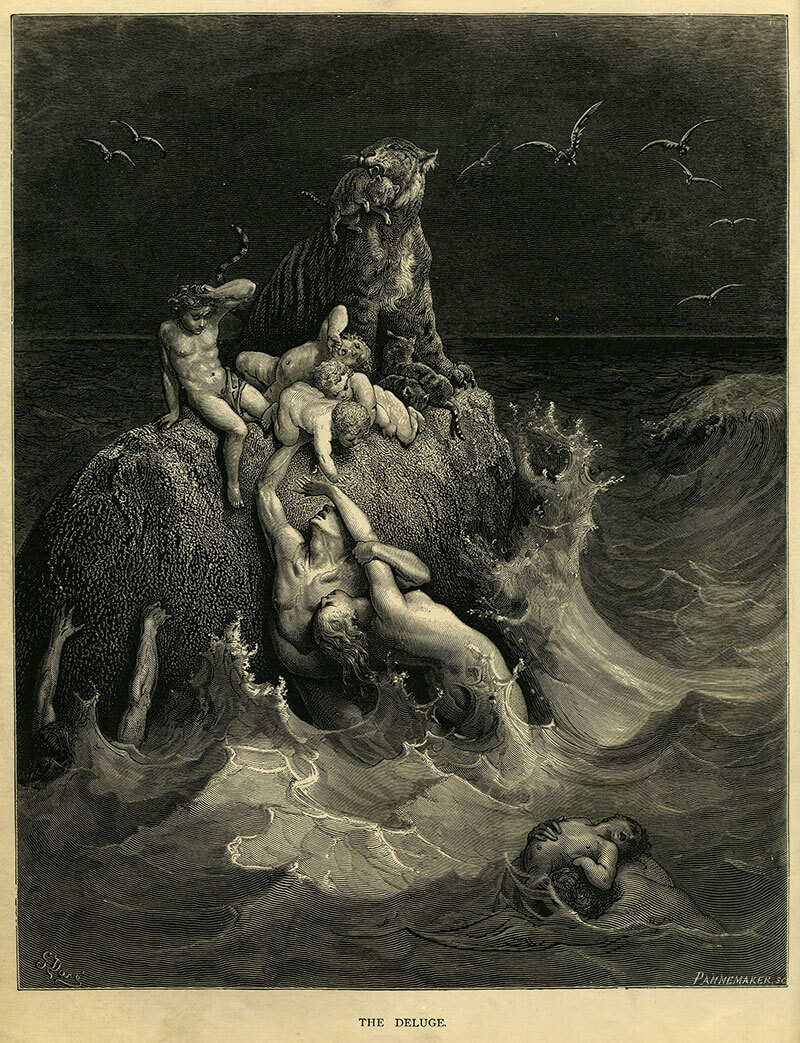
Skeptics argue that even a physical discovery of the Ark would not prove the biblical narrative in its entirety: a global flood that exterminated all terrestrial life would leave unequivocal geological traces, and those traces simply do not exist in a manner consistent with the Genesis account.
What cannot be denied is that the search continues to generate legitimate, if peripheral, science. The soil analyses at Durupinar, regardless of what the formation really is, contribute to the geological mapping of the region. The historical records of the expeditions document local oral traditions about the Flood dating back centuries. And the conversation between theology and geology, faith and method, remains among the most fascinating that humanity conducts.
In 2026, while Andrew Jones awaits authorization to excavate, and while the soil of Mount Tendürek keeps its silence, the question remains open, just as the window of the Ark remained open when the dove left for the last time and did not return.
Conclusion
No expedition, in 150 years of searching, has managed to present incontestable physical evidence of Noah's Ark. That is a fact. But it is also a fact that the Durupinar site possesses characteristics that continue to defy exclusively geological explanations, that new technologies are producing previously impossible data, and that the region mentioned in the Bible as "the mountains of Ararat" houses one of the most awaited archaeological investigations of the century.
The history of the search for the Ark is also a mirror of the human condition: the desire to touch the sacred with our hands, to transform faith into stone, to find in the physical world an anchor for what we already believe in our hearts. If the excavation of Durupinar confirms an artificial structure, biblical archaeology will change forever. If it confirms only basalt and limonite, the question will return to where perhaps it has always belonged: to the domain of faith, where no radar penetrates.
Footnotes
- Genesis 6:14-16. English Standard Version. Crossway Bibles.
- Bryce, James (1878). "On the relation of the present condition of Armenia to its past history". Royal Geographical Society Proceedings. Bryce's original text about his ascent of Ararat.
- Collins, Lorence G.; Fasold, David (1996). "Bogus 'Noah's Ark' from Turkey Exposed as a Common Geologic Structure". Journal of Geoscience Education, vol. 44, pp. 439-444. The article that refuted claims about Durupinar as an artificial structure.
- Jones, Andrew; Crabtree, Bill; Bayraktutan, Mehmet Salih (2026). Soil Study Report, Durupinar Formation, Üzengili Village, Turkey. Noah's Ark Scans Project. Published on noahsarkscans.com in April 2026.
- Magness, Jodi. Statement regarding the search for Noah's Ark, cited in Aventuras na História, July 2025.
- Fasold, David (1988). The Ark of Noah. Wynwood Press. Account of the 1985 expedition to Durupinar, with initial GPR data.
- Balsiger, Dave; Sellier, Charles (1974). In Search of Noah's Ark. Sun Classic Books. Compilation of expedition reports from 1856 to 1974.
- Wikipedia contributors. "Searches for Noah's Ark". Wikipedia, The Free Encyclopedia. Accessed May 2026.
Perguntas Frequentes


Continue studying Archaeology
Discover the Secrets of the Bible