



Clandestine temples in the desert, goddess figurines hidden inside homes, pagan altars within royal fortresses, and more than 850 clay idols unearthed in excavations. The evidence that idolatry seeped deep into Israel is overwhelming, and every artifact recovered confirms with striking fidelity what the prophets denounced almost three thousand years ago.
When we read the Scriptures, we encounter a constant tension between the divine call for Israel to be a holy nation, set apart for the Lord, and the historical reality of a people who repeatedly yielded to the pagan cults of their neighbors. The Bible denounces this unfaithfulness in hundreds of passages, from the major prophets to the historical books. For a long time, skeptics viewed these accounts as literary exaggeration or religious propaganda by late scribes. But in recent decades, archaeological excavations in Israel, the Negev, and the border regions have brought to light physical evidence that confirms, with unsettling precision, exactly what the prophets saw and condemned.
This article gathers the principal biblical, historical, and archaeological evidence of idolatry in Israel, organizing the material into a narrative that runs from Sinai to the Babylonian exile. The reader will see that idolatry was not an isolated or marginal deviation; it was a structural, persistent problem, denounced by the prophets and finally confirmed by the stones and potsherds that slept for millennia beneath the soil of the ancient Near East.
What "Idolatry" Means in the Biblical Context
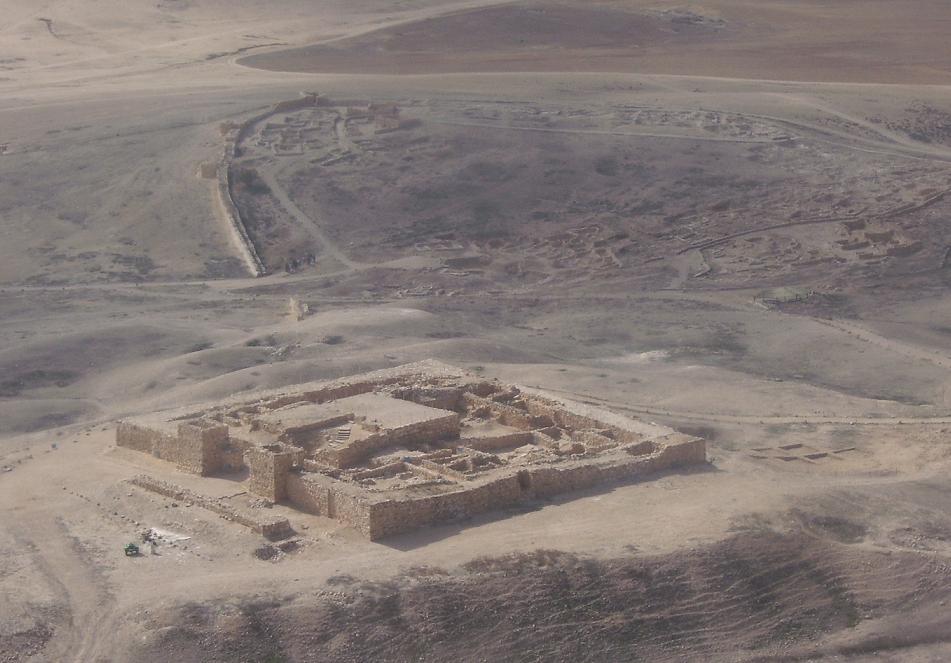
Before examining the evidence, it is essential to understand what the Bible means by idolatry. The most common Hebrew term is avodah zarah, literally translated as "strange service" or "foreign worship." In essence, idolatry is any form of worship directed to anything other than the one God of Israel, identified by the name YHWH.
The concept takes shape in the Decalogue, the ethical and religious foundation of the nation. The Ten Commandments open with an explicit prohibition: "You shall have no other gods before me. You shall not make for yourself a carved image, or any likeness of anything that is in heaven above, or that is in the earth beneath, or that is in the water under the earth. You shall not bow down to them or serve them" (Exodus 20:3-5). The first two commandments therefore define Israel's spiritual identity: exclusive monotheism and an absolute prohibition of images.
Types of Idolatry Practiced in Antiquity
Idolatry in the ancient Near East took many forms. There was open polytheism, with direct worship of foreign gods such as Baal, Astarte, Chemosh, and Molech. There was syncretism, in which pagan elements blended into the worship of the Lord, creating a hybrid religion. There was domestic idolatry, with small images kept inside homes. And there was official idolatry, sponsored by kings and priests at high places and secondary temples.
The Bible condemns all of these forms but pays special attention to syncretism, perhaps because it was the most seductive and enduring kind. Syncretism allowed the Israelites to maintain the appearance of faithfulness to the Lord while importing pagan practices alongside it. It was a disguised idolatry, one that deceived the conscience by keeping the name of the true God on the lips even while other gods were worshiped in the heart.
The First Great Biblical Evidence: The Golden Calf
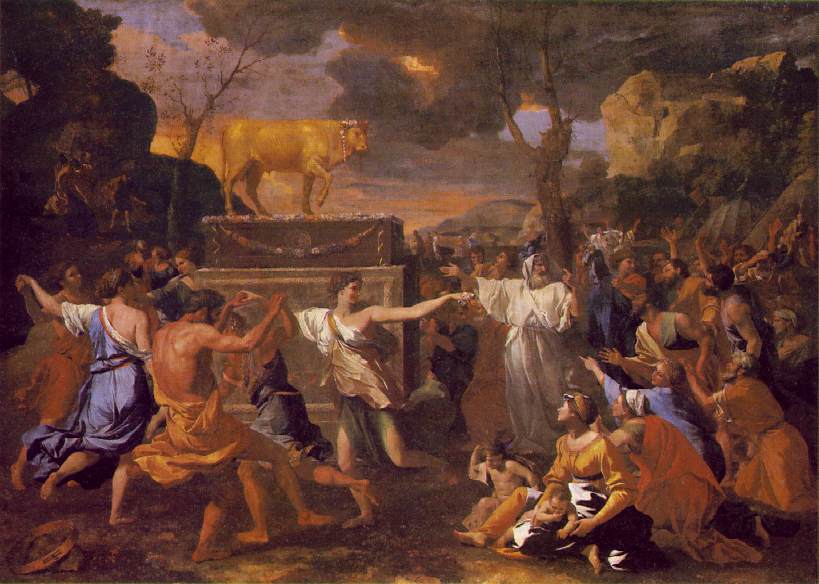
The first major idolatrous crisis of the people happened at the foot of Mount Sinai, only weeks after Israel had heard the voice of God at the giving of the Law. While Moses remained on the mountain receiving the tablets, the people grew impatient and demanded that Aaron give them a visible god. The high priest yielded, gathered the people's gold, and cast a calf, declaring: "These are your gods, O Israel, who brought you up out of the land of Egypt" (Exodus 32:4).
The episode is shocking on several counts. First, for the speed of the fall: the people apostatized within a few days. Second, for the symbolic choice: the calf was a universal icon of fertility and power in the ancient Near East, especially in Egypt (where the Apis bull was venerated) and in Canaan (where Baal was often depicted as a bull). Third, for the level of priestly involvement: it was Aaron, the future high priest, who fashioned the image.
The golden calf became the prototype of every later apostasy in Israel. The bull image would resurface centuries later, more grievously still, at Dan and Bethel during the reign of Jeroboam I.
The Idolatry of King Solomon and the Beginning of Spiritual Decline
Few biblical figures present a contrast as dramatic as Solomon. Son of David, he received divine wisdom, built the Temple in Jerusalem, and led Israel to its political and economic peak. Yet the book of 1 Kings records with painful candor the spiritual shipwreck of the wisest king in history.
"For when Solomon was old his wives turned away his heart after other gods, and his heart was not wholly true to the Lord his God, as was the heart of David his father. For Solomon went after Ashtoreth the goddess of the Sidonians, and after Milcom the abomination of the Ammonites" (1 Kings 11:4-5).
The sacred text is specific: Solomon built high places for Chemosh (the god of Moab) and for Molech (the god of Ammon) on the mountain east of Jerusalem. In other words, in the very capital of the kingdom and in plain sight of the Temple of the Lord, sanctuaries to pagan deities were erected. The king's foreign wives burned incense and offered sacrifices to their gods with royal approval.
This is the backdrop that explains why, beginning with Solomon's reign, idolatry ceased to be the exception and became a structural rule in Israel. The kings who followed, especially in the northern kingdom, would push that apostasy to even more extreme levels.
The Calves of Jeroboam: Idolatry as State Policy
After the death of Solomon, the kingdom split. Rehoboam inherited Judah and Jerusalem, while Jeroboam I took the ten northern tribes. To prevent his subjects from making pilgrimages to the Temple in Jerusalem (and potentially returning to align themselves with Rehoboam), Jeroboam instituted a measure that would seal the spiritual fate of the northern kingdom: he set up two golden calves, one in Dan and another in Bethel, declaring to the people: "Behold your gods, O Israel, who brought you up out of the land of Egypt" (1 Kings 12:28).
The phrase is virtually identical to Aaron's at Sinai. This was no coincidence. Jeroboam knew he was reproducing the sin of the golden calf, but he calculated that the political stability of his kingdom depended on it. From that moment on, the northern kingdom would have official worship at alternative sanctuaries, with non-Levitical priests and a modified religious calendar. It was idolatry as state policy.
Archaeology confirms the existence of these cultic centers. At Tel Dan, excavations led by Avraham Biran beginning in the 1960s revealed a great high place (in Hebrew, bamah) with a monumental altar, ceremonial stairways, and cultic installations that fit perfectly with the biblical description of Jeroboam's sanctuary. The site remained active for centuries, until its Assyrian destruction in the 8th century BC.
The Edomite Temple at Tamar: Idolatry in the Heart of Judah
One of the most striking archaeological discoveries linked to idolatry in Israel came to light in the 1990s at Ein Hatzeva, in the Arabah desert. The site, identified by archaeologists as the biblical Tamar (the border fortress built by Solomon and mentioned in 1 Kings 9:18 and Ezekiel 47:19), kept an extraordinary secret beneath its oldest layers.
The fortress stood at a strategic point: abundant springs in the middle of the desert, control of trade routes between the Red Sea and Judea, and proximity to the border with Edom, the neighboring kingdom founded by descendants of Esau and historically an enemy of Israel. The Edomites had been subjugated by David and were still vassals in Solomon's time, yet the tension between the two peoples spanned centuries.
Seventy-Five Pagan Cult Objects Smashed in a Pit
While excavating an area adjacent to the fortress's northern wall, archaeologists Rudolph Cohen and Yigal Yisrael, working for the Israel Antiquities Authority, discovered a pit deliberately dug and sealed with heavy stones. Inside the pit lay seventy-five cult objects broken into fragments, all belonging to an Edomite shrine from the late 7th century BC.
The assemblage included seven stone incense altars, three anthropomorphic statuettes (a female figure holding an offering bowl and two warrior male figures), multiple cultic pedestals, chalices, incense burners, clay pomegranates (a cultic symbol also present in the Temple in Jerusalem), and a stone sculpture believed to represent the deity worshiped at the shrine. Because each piece had been broken inside the pit without any fragment being lost, the archaeologists were able to reconstruct the objects almost in their entirety, and the assemblage is now on display at the Israel Museum.
Near the pit, a circular stone seal with an Edomite inscription was discovered, depicting two men in long tunics, one on each side of a horned altar, in gestures of blessing and offering. The seal confirmed the Edomite identity of the shrine and interpretively sealed the entire discovery.
Why Was There an Edomite Shrine Inside Judah?
The question is unavoidable: how could a temple dedicated to enemy gods exist within Judah's own territory? The answer most likely lies in the pattern of syncretism described in the Bible. The sacred text reports that King Amaziah of Judah, after defeating the Edomites in battle, "brought the gods of the men of Seir, set them up as his gods, and worshiped them, making offerings to them" (2 Chronicles 25:14). Military victory, paradoxically, produced spiritual defeat.
It is plausible that the shrine at Tamar reflects this same pattern: Judahite soldiers, traders, or settlers in contact with Edomites along a porous border, importing the foreign gods and maintaining a local cult until the central authorities dismantled it. The dating of the assemblage, the late 7th century BC, points exactly to the era of King Josiah's great religious reform in 621 BC.
The Ceremonial Destruction and the Reform of Josiah
What makes this discovery so valuable is precisely the way the shrine was destroyed. It was not a chaotic looting nor an earthquake; it was a ritual and intentional destruction. Someone removed each cult object, dug a wide pit, carefully broke each piece inside the pit, and sealed everything with heavy stones. This pattern fits precisely with the biblical description of Josiah's reforms recorded in 2 Kings 23 and 2 Chronicles 34.
The text says: "In the eighth year of his reign, while he was yet a boy, Josiah began to seek the God of David his father, and in the twelfth year he began to purge Judah and Jerusalem of the high places, the Asherim, and the carved and the metal images. And they chopped down the altars of the Baals in his presence, and he cut down the incense altars that stood above them. And he broke in pieces the Asherim and the carved and the metal images, and he made dust of them and scattered it over the graves of those who had sacrificed to them" (2 Chronicles 34:3-4).
The Edomite shrine at Tamar is therefore a silent physical witness to Josiah's reform. The stones and potsherds confirm, in the heart of the Arabah desert, what the Bible had recorded centuries earlier.
The Temple at Tel Arad: Syncretism in the Kingdom of Judah
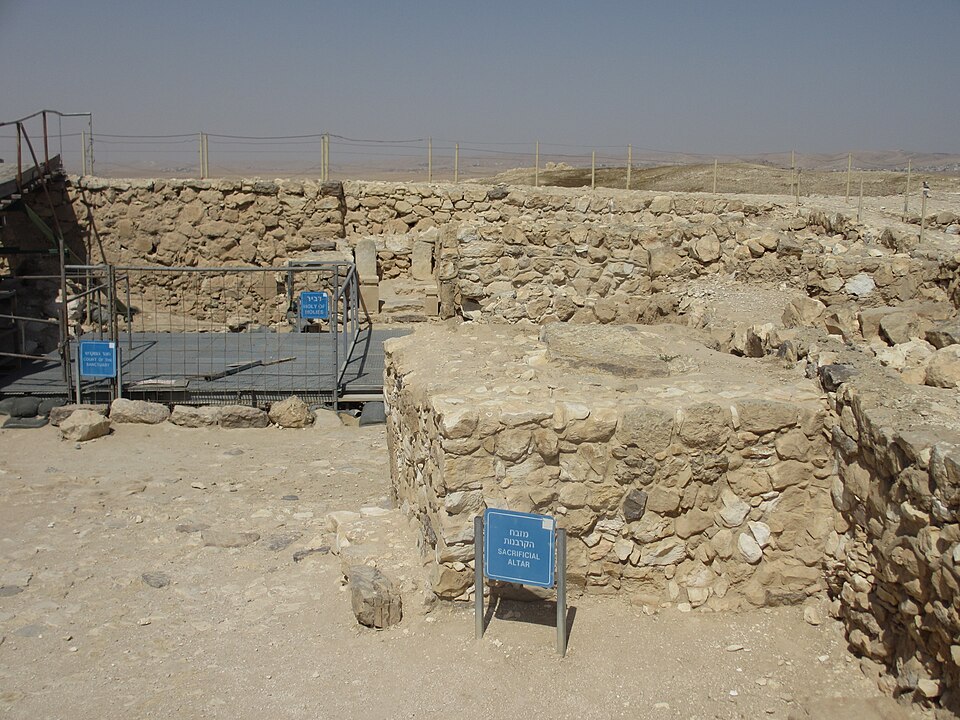
Another crucial discovery for understanding idolatry in Israel came from the excavations at Tel Arad, in the eastern Negev, led by Yohanan Aharoni beginning in the 1960s. On the heights of the Iron Age Israelite fortress, archaeologists found something no one expected: a small temple built according to the tripartite plan of the Temple in Jerusalem, with an outer courtyard, main hall, and Holy of Holies.
Inside the Holy of Holies stood two incense altars of different sizes and two standing stones (in Hebrew, matsevot). Modern chemical analyses of the residues preserved on the altars revealed, in a 2020 study, that the larger altar contained frankincense residues, while the smaller one bore traces of cannabis burned mixed with animal fat, possibly for psychoactive use during rituals.
The presence of the two matsevot and the two incense altars strongly suggests a dual cult, in which the Lord was worshiped alongside a female consort, possibly Asherah. This pattern of syncretism is exactly what prophets such as Jeremiah and Isaiah denounced.
The Arad temple was carefully decommissioned at some point between the reigns of King Hezekiah and King Josiah, both religious reformers. The matsevot were laid down and buried, the altars covered with earth, and the temple was never reactivated, exactly as 2 Kings 18:4 and 2 Kings 23:8 describe regarding the reforms of these kings.
The Asherah Figurines: Mass-Scale Domestic Idolatry
Perhaps the most overwhelming archaeological evidence of idolatry in Israel comes not from public temples but from ordinary homes. Since the 1920s, excavations at Israelite and Judahite sites have brought to light more than 850 female terracotta figurines, dated mainly to the 8th and 7th centuries BC. 1
These statuettes, known to archaeologists as "Judean Pillar Figurines," depict a woman cupping prominent breasts, in a posture associated with fertility and nursing. The vast majority of specialists, including the renowned archaeologist William Dever, identify these figurines with the goddess Asherah, consort of the Canaanite god El, who was worshiped in parallel with the Lord even in Judah.
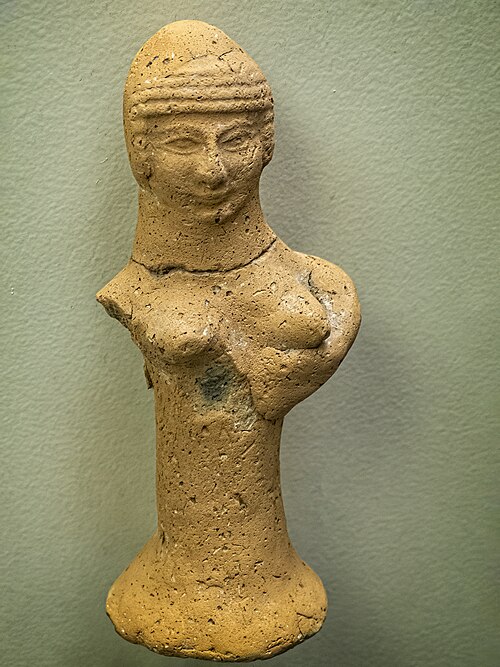
The most disturbing detail is that these figurines were found in private homes, not in public temples. This means that idolatry in Israel was not merely a problem of the elites or of high places; it was an intimate, domestic, daily practice present in thousands of Israelite households. The prophetic line from Jeremiah takes on a concrete dimension here: "For your gods have become as many as your cities, O Judah" (Jeremiah 2:28).
Inscriptions from Kuntillet Ajrud and Khirbet el-Qom
Two epigraphic discoveries, made in the late 20th century, shook the academic world by revealing inscriptions in ancient Hebrew that mention the Lord "and his Asherah."
Kuntillet Ajrud
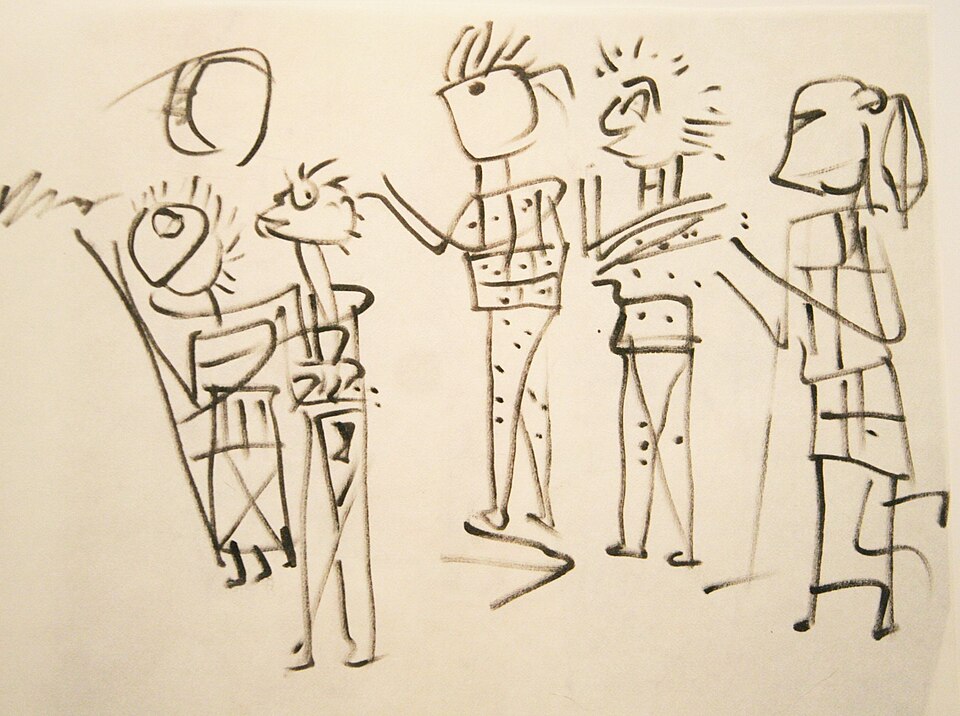
The site of Kuntillet Ajrud, in the northeastern Sinai Peninsula, was excavated in the 1970s and revealed a small way station dated to about 800 BC. On large storage jars (pithoi) and fragments of wall plaster, archaeologists found Hebrew inscriptions and drawings. Some inscriptions contain blessing formulas such as "Blessed be [so-and-so] by YHWH of Samaria and his Asherah" and "Blessed be [so-and-so] by YHWH of Teman and his Asherah."
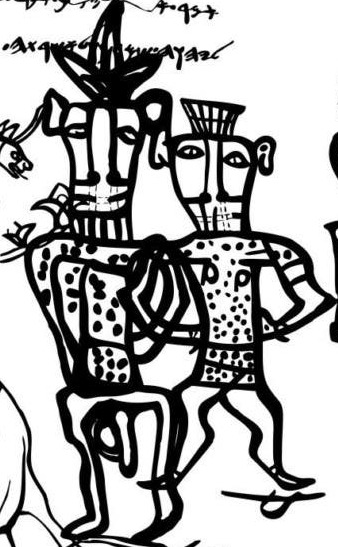
The drawings include a male figure, a female figure, and a stylized tree, possibly representing the Asherah pole. The texts demonstrate that, in the 8th century BC, groups of Israelites traveling on commerce through the Sinai openly associated Asherah with the Lord as a kind of divine consort.
Khirbet el-Qom
About thirteen kilometers west of Hebron, in a late 8th-century BC burial chamber, a rock-cut inscription was discovered on a stone pillar. The text, attributed to a man named Uriahu, declares: "Blessed be Uriahu by YHWH, and by his Asherah he saved him from his enemies."
These two inscriptions, together with the 850 figurines, form a robust picture: the worship of Asherah alongside the Lord was neither marginal nor merely literary. It was a reality lived out by large segments of the Israelite population, even in Judah, even after David and Solomon, even during the centuries of the great prophetic preaching.
The Reforms of Hezekiah and Josiah: The Systematic Fight Against Idolatry
In the face of such pervasive apostasy, God raised up reformer kings. The two most important were Hezekiah (late 8th century BC) and Josiah (late 7th century BC).
Hezekiah's Reform
Hezekiah confronted the apostasy inherited from his idolatrous father Ahaz. The biblical text records: "He removed the high places and broke the pillars and cut down the Asherah. And he broke in pieces the bronze serpent that Moses had made, for until those days the people of Israel had made offerings to it (it was called Nehushtan)" (2 Kings 18:4).
The detail of Nehushtan is revealing. The bronze serpent, originally an instrument of healing in the wilderness (Numbers 21:8-9), had become, with the passing of centuries, an object of idolatrous cult. Israel turned even what God had used for salvation into an idol. Hezekiah destroyed the relic to stop it from continuing to be worshiped. A recently analyzed 8th-century BC inscription confirms the religious environment of the Kingdom of Judah in this period.
Josiah's Reform
Josiah's reform, even more radical, was triggered by the discovery of the Book of the Law in the Temple during restoration work (2 Kings 22:8). Hearing the curses reserved for idolaters, Josiah tore his garments and launched an unprecedented national purification. He demolished the high place that Solomon had built for Chemosh and Milcom, defiled Topheth in the Valley of Hinnom (where children were sacrificed to Molech), destroyed the sanctuary at Bethel founded by Jeroboam, and decommissioned every high place throughout Judah.
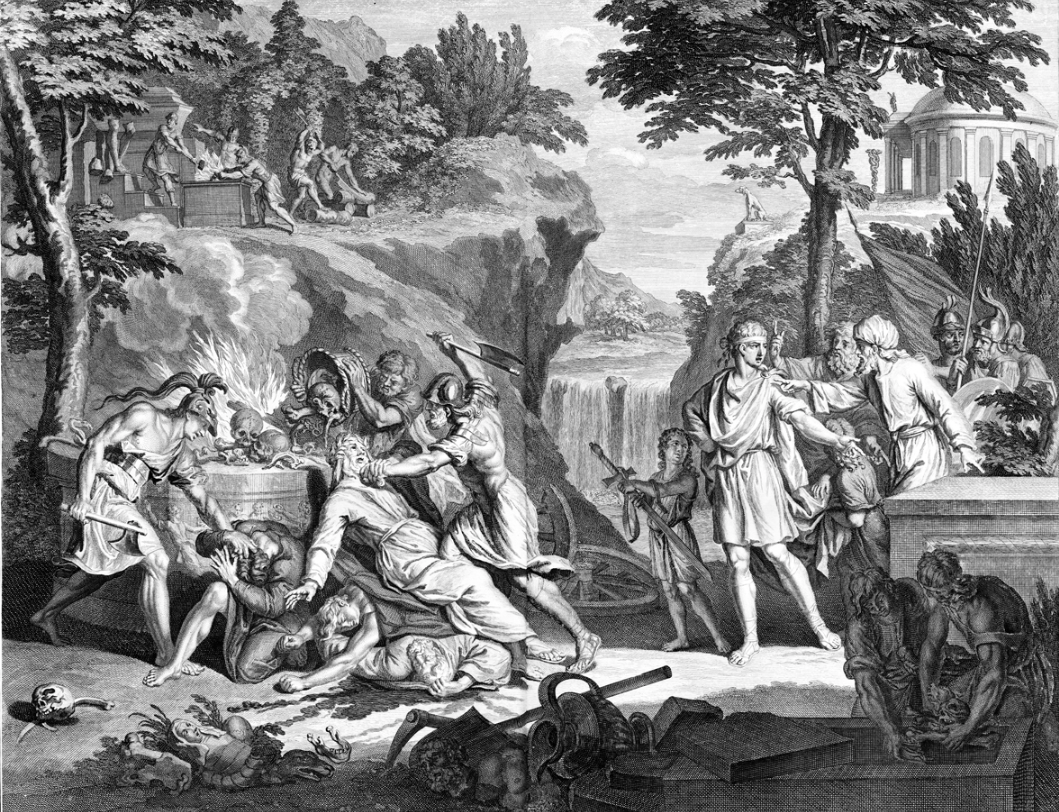
The end of the Edomite shrine at Tamar, the temple at Tel Arad, and the disappearance of Asherah figurines from the Judahite archaeological record after the Babylonian exile, all of these material facts converge chronologically with the reforms recorded in the Bible.
Idolatry as the Cause of the Exile
Prophetic theology was always clear: persistent idolatry would be the cause of exile. The prophets Isaiah, Jeremiah, Ezekiel, and Amos warned, for more than two centuries, that Israel and Judah's stubbornness in following other gods would bring catastrophic consequences.
The Northern Kingdom (Israel) fell to the Assyrians in 722 BC, and the chronicler summarizes the cause: "And this occurred because the people of Israel had sinned against the Lord their God, who had brought them up out of the land of Egypt from under the hand of Pharaoh king of Egypt, and had feared other gods and walked in the customs of the nations whom the Lord drove out before the people of Israel" (2 Kings 17:7-18).
The Southern Kingdom (Judah) fell to the Babylonians in 586 BC, and Solomon's Temple was burned. After the exile, something remarkable happened: idolatry virtually disappears from the Jewish archaeological record. The Asherah figurines, so abundant in the pre-exilic period, vanish after the return of the exiles. The suffering of Babylon seems to have accomplished what centuries of prophetic preaching had not.
Spiritual Lessons from the Evidence of Idolatry
The combined biblical and archaeological evidence offers timeless lessons for the modern reader.
The first is the subtlety of syncretism. Idolatry rarely enters by the front door as an open rejection of God. It infiltrates as a complement, an alliance, an addition. Israel did not trade the Lord for Baal; Israel worshiped both. It was precisely this syncretism, more than declared paganism, that the prophets fought against most fiercely.
The second lesson is the power of cultural imagery. The Asherah figurines were small, cheap, easy to produce and to hide. Even so, they multiplied into the thousands and influenced entire generations. Small repeated compromises, small daily concessions, are the paths by which idolatry enters any generation.
The third lesson is the value of spiritual reform. Hezekiah and Josiah showed that it is possible to reverse, even partially, centuries of apostasy. Their reforms required courage, decision, demolition, and rebuilding. But they showed that God honors those who seek purity in worship.
The fourth lesson is the faithfulness of the prophetic witness. For centuries, critics suspected that prophets like Jeremiah were exaggerating when they described Judah as filled with idolatrous altars on every corner. Today's archaeology shows that if the prophets erred, it was by underestimating the problem, not by inflating it.
Conclusion: The Witness of the Stones
The evidence of idolatry in Israel forms one of the most consistent cases of convergence between Bible, history, and archaeology. Where the sacred texts denounced pagan cults, excavations brought broken altars to light. Where the prophets spoke of figurines hidden in homes, thousands of statuettes emerged from the soil. Where the Bible described radical religious reforms, ritual pits and decommissioned temples have been discovered exactly in the places and periods expected.
The witness of the stones does not replace the witness of Scripture, but it illuminates it. Walking through the Arabah desert, contemplating the fragments of the Edomite temple of Tamar reconstructed at the Israel Museum, or observing the matsevot of Tel Arad in their silent chamber, the student of the Bible understands, in flesh and stone, why the prophets cried out with such urgency. Idolatry was not an ancient problem sealed within ancient books. It was a physical, daily, domestic, and national reality that required divine intervention, prophetic denunciation, and finally the judgment of exile to be purged.
For today's reader, the lesson is clear. The idols of the modern world are rarely made of stone or bronze, but they operate by the same mechanisms: cultural seduction, political convenience, silent syncretism, and domestic compromise. The prophets' warning, confirmed by archaeology, remains current: faithfulness to the true God demands vigilance, decision, and, when necessary, the courage to tear down what does not belong to him.
Footnotes
- Dever, William G. Did God Have a Wife? Archaeology and Folk Religion in Ancient Israel. Eerdmans, 2005, pp. 176-184. Seminal study on the Judahite pillar figurines and their cultic meaning.
- Cohen, Rudolph; Yisrael, Yigal. "Smashing the Idols: Piecing Together an Edomite Shrine in Judah." Biblical Archaeology Review, vol. 22, no. 4 (Jul-Aug 1996). Official report on the discoveries at Ein Hatzeva (biblical Tamar).
- Aharoni, Yohanan. "The Israelite Sanctuary at Arad." Bulletin of the American Schools of Oriental Research, no. 222 (1976), pp. 5-17.
- Arie, Eran; Rosen, Baruch; Namdar, Dvory. "Cannabis and Frankincense at the Judahite Shrine of Arad." Tel Aviv Journal, vol. 47 (2020), pp. 5-28. Chemical analysis of the incense residues on the altars at Tel Arad.
- Meshel, Ze'ev. Kuntillet 'Ajrud (Horvat Teman): An Iron Age II Religious Site on the Judah-Sinai Border. Israel Exploration Society, 2012. Definitive publication on the inscriptions.
- Hadley, Judith M. The Cult of Asherah in Ancient Israel and Judah. Cambridge University Press, 2000.
- Holy Bible, English Standard Version. References to 1 Kings 11; 1 Kings 12:25-33; 2 Kings 17:7-23; 2 Kings 18:1-6; 2 Kings 23; 2 Chronicles 25:14; 2 Chronicles 34; Exodus 20:1-6; Exodus 32; Jeremiah 2:28; Deuteronomy 16:21-22.
- Biran, Avraham. Biblical Dan. Israel Exploration Society, 1994. Excavation report on the sanctuary of Tel Dan.
Perguntas Frequentes


Continue studying Archaeology
Discover the Secrets of the Bible